Global Health Academy Explores Re-Establishing Partnership with Chiricahua Community Health Centers in Douglas, Arizona
- Nuvance Health Global Health Program

- 1 day ago
- 5 min read

In May 2026, a Global Health Academy delegation traveled to Cochise County, Arizona, for a multi-day site visit to Chiricahua Community Health Centers, Inc. (CCHCI), with the goal of exploring how the Douglas border region could serve as the Academy’s first domestic site for Global Health Electives for medical students and residents. The visit focused on understanding the clinical, educational, and community context of southeastern Arizona and on identifying opportunities for renewed collaboration in global health education.
The delegation included Michelle Robertson, President, Nuvance Market; Bulat Ziganshin, Executive Director, Global Health; Carolyn Guarino, Manager, Global Health Program and Academy; and Stephen Scholand, Faculty and Senior Advisor, Global Health Academy. Based in Bisbee during the visit, the team traveled throughout the region to visit CCHCI facilities and meet with local leaders and community partners.
Douglas is a unique and deeply compelling setting for global health education. Located directly on the U.S.-Mexico border, it shares a binational community with neighboring Agua Prieta, Sonora. This geography makes the region especially rich for learning about border health, access to care, migration, health equity, and the social and structural factors that shape health across communities. For the Global Health Academy team, the visit was both eye-opening and inspiring, offering a powerful reminder that global health is not defined only by distant travel, but also by the realities of communities and health systems within our own national borders.
CCHCI itself proved to be an extraordinary organization and a highly promising potential partner. Founded in 1996 as a small rural health clinic, Chiricahua has grown into the largest primary care organization in southeastern Arizona, serving more than 35,000 patients annually. Through a broad network of medical, dental, behavioral health, and pharmacy clinics, as well as mobile medical and dental units, CCHCI now serves approximately 135,000 people across more than 6,200 square miles of Cochise County. The breadth of services, the strong commitment to underserved communities, and the integration of clinical and community-based care all left a strong impression on the visiting team.
The first day of the visit began at the Chiricahua Early Childhood Center of Excellence, where the delegation met with CCHCI leadership, including Jonathan Melk, Chief Executive Officer; Darlene Melk, Chief Medical Officer; and Dennis Walto, Chief External Affairs Officer. The CCHCI team provided a comprehensive overview of the organization’s history, growth, partnerships, funding model, and the challenges and opportunities of delivering care in this complex border region. This opening session laid the foundation for thoughtful and highly productive discussions about what a renewed partnership in global health education could look like.

The team then toured the Douglas Primary Care Cluster, including the Ginger Ryan Clinic, Douglas Pharmacy, Douglas Administration, and the Pediatric Center of Excellence. These visits provided a firsthand look at the scope of services offered by CCHCI, including adult and pediatric medical care, dentistry, dietetics, radiology, integrated behavioral health, laboratory and acute care services, women’s health programming, outreach and enrollment, and other special programs. During a lunch meeting, the Global Health Academy delegation presented the Academy’s work and shared its vision for a possible future partnership centered on global health education and trainee experiences. The day concluded with a debriefing session and more specific conversations about how a bi-directional partnership might be re-established.
The second day expanded the team’s view of CCHCI beyond Douglas and highlighted the full regional reach of the organization. The delegation visited the Bisbee Family Health Center, the Bisbee Pharmacy and Training Center, and the Cliff Whetten Clinic in Elfrida, the original “mother ship” of Chiricahua’s work. Seeing both the founding site and the current regional infrastructure helped illustrate how CCHCI has evolved over time while remaining rooted in community-based care.
One of the most memorable experiences of the visit was an afternoon spent with Community Health Workers at Mountain State Nursery. There, the team observed health assessments being conducted for farm workers and had the opportunity to speak directly with workers about their lives, labor, and access to care. This encounter offered a vivid and deeply educational example of public health outreach, social medicine, and the importance of meeting communities where they are. It also underscored the value of CCHCI as a site where trainees could learn not only in clinics, but also through community engagement and population-based perspectives on health.
Later that day, the delegation met with Barbara Lang, Director of the Cochise County Department of Health & Social Services. The discussion focused on the major health challenges facing Cochise County and on the potential value of a future Global Health Academy partnership with CCHCI. The support expressed for the concept of the partnership reinforced the sense that there is strong local alignment around the educational and community value such a collaboration could bring.
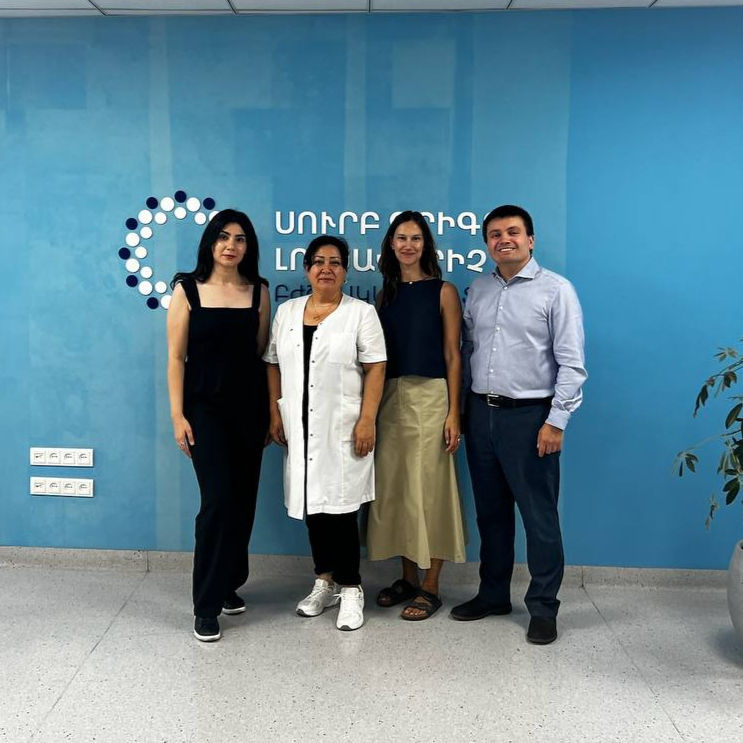
The third and final day of the visit centered on the U.S.-Mexico border and the possibility of incorporating a binational component into a future domestic global health elective. With the support of CCHCI leadership and in coordination with Frontera de Cristo, the team crossed into Agua Prieta, Sonora, where they visited Hospital General de Agua Prieta (IMSS Bienestar). There, they met with Dr. Rigoberto Olguín, the hospital’s director, discussed the planned CCHCI partnership, and explored the possibility of having students and residents spend part of their elective experience at the hospital. A detailed tour of the hospital offered important insight into the services provided, the populations served, and the challenges faced in that setting. For the visiting team, this was a particularly valuable opportunity to envision how a border-based elective could expose trainees to the realities of healthcare delivery on both sides of an international boundary.

The day in Agua Prieta also included visits to the Douglas-Prieta Trabaja Women’s Cooperative, a lunch meeting with Marina Forero, Director of the Children’s Enrichment Program, and a visit to the CAPTSIC Drug Rehabilitation Center. These experiences, facilitated by Frontera de Cristo, broadened the lens of the visit beyond formal healthcare institutions and highlighted the importance of community organizations, social support structures, and grassroots initiatives in shaping health and well-being. The day also offered time for reflection at the border itself, prompting important conversations about how borders are experienced and understood differently on each side, and what those realities mean in the context of health, care, and human connection.
Overall, the site visit to Arizona was a clear success. It was an eye-opening and deeply informative experience for the Global Health Academy team, one that expanded our understanding of domestic global health, border health, and the many ways in which clinical care, public health, and community engagement intersect in the Cochise County region. We came away with a profound appreciation for the scale, mission, and innovation of Chiricahua Community Health Centers, as well as for the hospitality, openness, and generosity of all of our hosts.
We are especially grateful to Jonathan Melk, Darlene Melk, Dennis Walto, and the entire CCHCI team for welcoming us so warmly and for sharing their time, experience, and vision with us. We are also thankful to our colleagues and hosts in Agua Prieta and to the team at Frontera de Cristo for helping make possible such a meaningful and memorable cross-border experience. The visit left us energized and optimistic about the future, and we look forward to continuing conversations about re-establishing a partnership that could create exceptional new learning opportunities for students and residents through a truly distinctive domestic global health elective site.
View the full photo gallery below: